
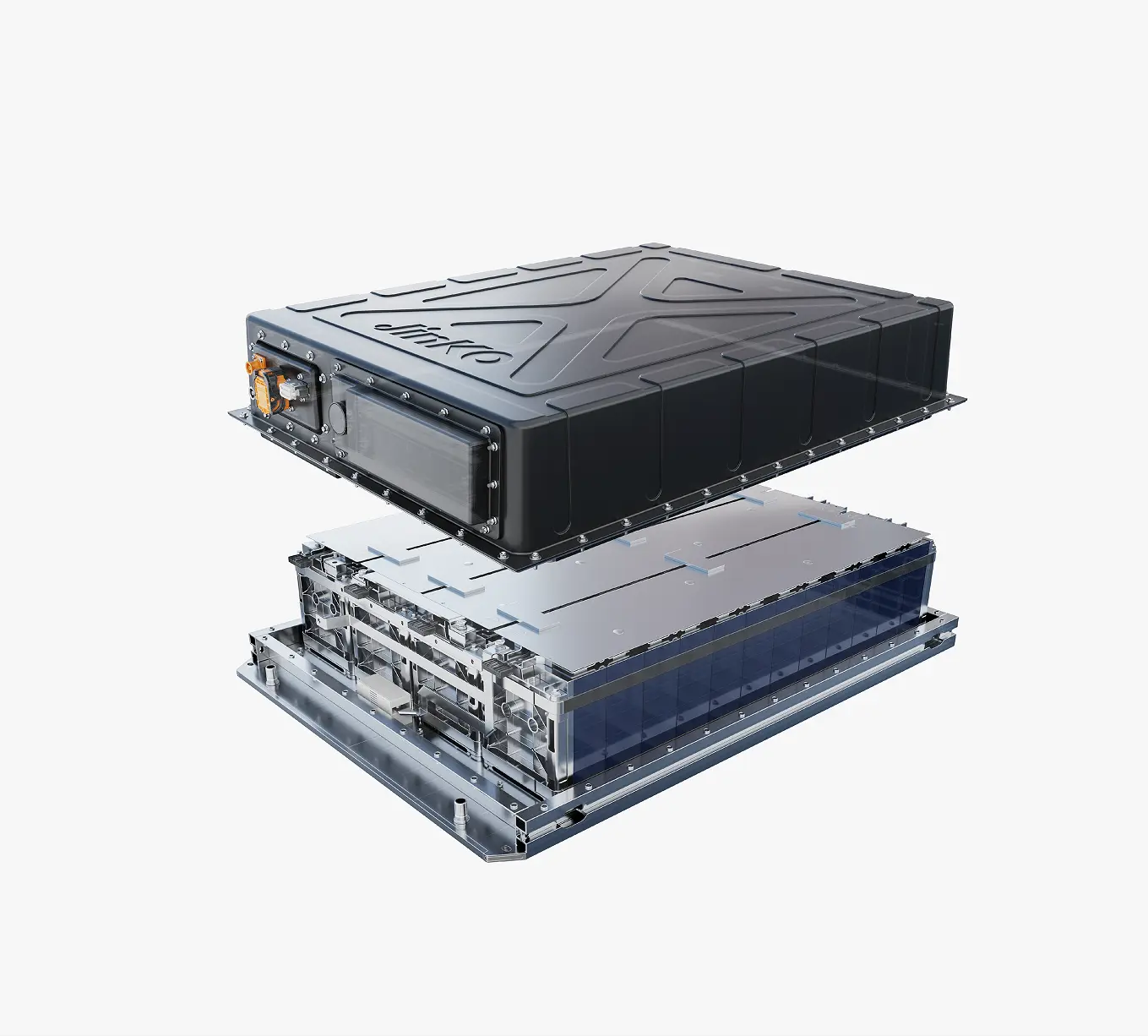
Battery products are defined by what happens inside them. Cell arrangement, mechanical protection, electrical connection, thermal management and serviceability all contribute to product value, but most of these features disappear as soon as the enclosure is closed. Exploded-view animation gives manufacturers a precise way to reveal that hidden engineering.
From a closed product to a readable system
A conventional product image presents the final form. An exploded view explains how that form is constructed. In animation, the exterior can separate into logical layers while the camera maintains a stable perspective. Viewers understand where each component belongs and how the complete assembly fits together.
For a battery system, the sequence might move from enclosure to pack, from pack to module and from module to cell. Supporting components such as busbars, wiring, sensors, insulation, cooling plates and structural parts can be introduced only when they are relevant. This prevents the image from becoming visually dense.
Engineering accuracy builds confidence
Battery exploded-view animation should be based on current CAD and technical review. Small errors in cell orientation, connector position or assembly order can reduce confidence among technical buyers. A reliable production process therefore includes model preparation, component classification, storyboard approval and engineering review before final rendering.
The goal is not to show every fastener. It is to select the details that support the product claim. If the message is high energy density, the animation may emphasize cell arrangement and packaging efficiency. If the message is safety, it may focus on separation, sensing, cooling and protection layers.
Transparency and section views
Not every product needs to fully explode. Transparent materials and sectional views can create a quieter, premium result. A transparent housing keeps the product recognizable while revealing internal modules. A moving section plane can explain a cooling channel or connection path without dismantling the whole assembly.
These methods are particularly effective in a short launch film, where the audience needs to understand the product quickly. They also create strong still images for brochures, websites and exhibition graphics.
Show assembly, service and installation logic
Exploded-view animation is not limited to marketing. Reversing the sequence can show assembly. Isolating a removable module can explain service access. Step-by-step motion can support installation instructions while avoiding the cost and safety constraints of filming an unfinished product or a live electrical system.
For global training, 3D sequences can reduce dependence on language. Labels and voiceover can be localized, while the core visual instructions remain consistent across markets.
Plan the output around the audience
Senior buyers may need a concise overview of architecture and differentiation. Engineers may need more detail. Installers need clear sequence, orientation and access information. One master 3D model can support all three, but each output should have its own edit and information density.
Before production, define the decision the animation should help the viewer make. Should they understand capacity, trust the safety design, recognize installation simplicity or compare the architecture with another system? This question is more useful than beginning with a preferred visual style.
Reuse approved assets
Once the battery model, materials and internal structure have been approved, the assets can generate product films, technical explainers, renderings, web loops and social clips. This creates a coherent visual system and makes future product updates more efficient.
CMUSE develops battery pack animation and technical CGI for energy and industrial brands. We work from engineering materials to create visuals that are accurate enough for technical teams and clear enough for global customers.