
An inverter may look simple from the outside, but its value is created by complex power electronics, thermal design, protection and control. For global sales teams, this creates a communication gap: the product must feel easy to understand without losing the technical credibility expected by engineers and professional buyers.
Connect product form with internal engineering
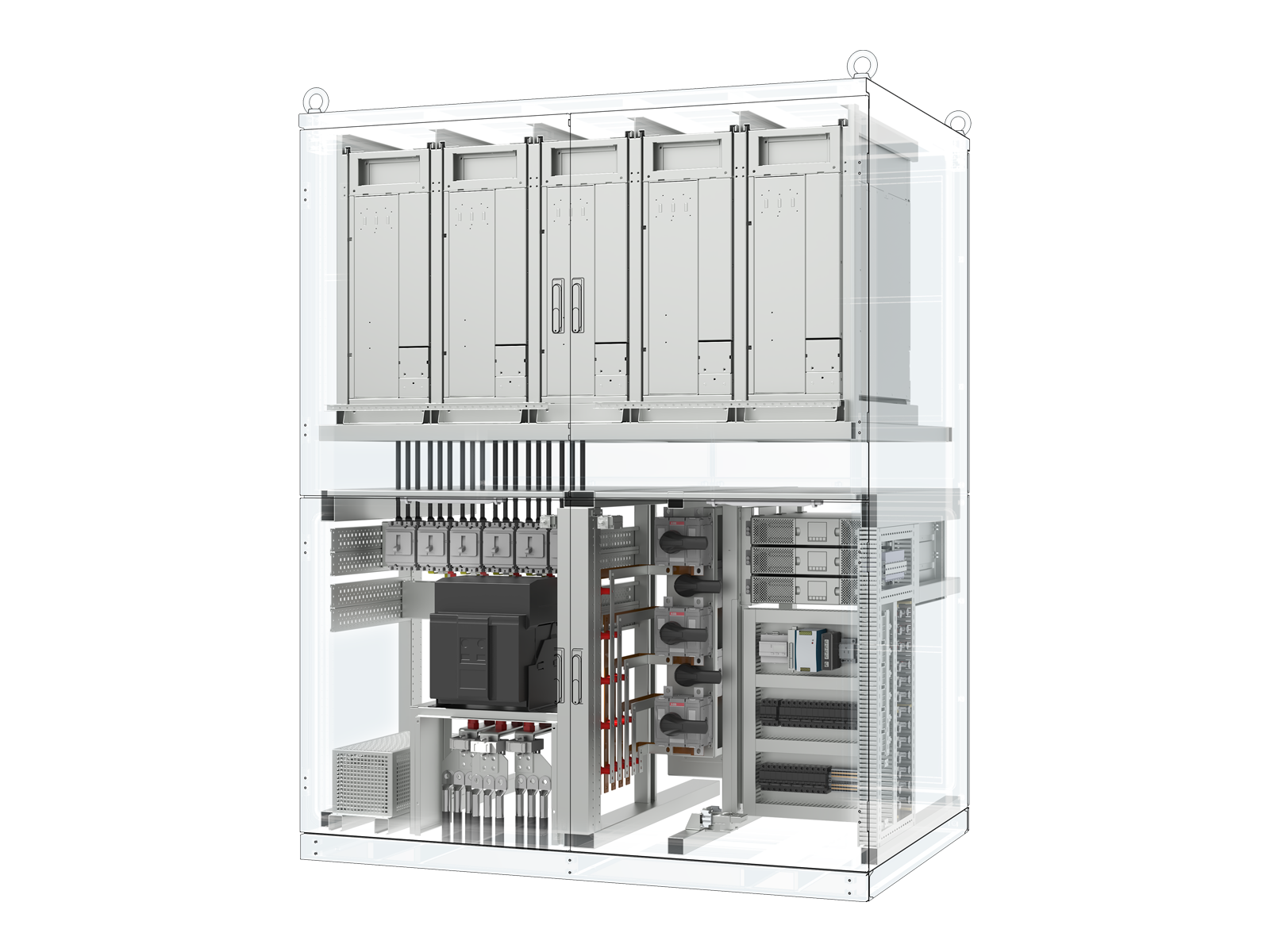
Inverter product animation can begin with the exterior design and then transition into a transparent or sectional view. This keeps the visual identity of the product while revealing power modules, inductors, capacitors, cooling structures, switching devices and connection areas.
The internal view should not become a parts catalogue. Components are grouped around the product message. A PCS inverter film focused on maintainability might show modular access and replacement. A solar inverter film focused on reliability might emphasize thermal paths, protection and enclosure design.
Visualize power flow and operating logic
Power conversion cannot be filmed directly. In 3D, animated paths can show DC input, conversion stages, AC output and communication with a wider energy system. The same approach can explain charging and discharging modes, grid interaction, backup operation or coordination with a battery management system.
These visual devices are most effective when they remain restrained. A clear path, controlled color palette and well-timed labels usually communicate more than a screen filled with effects.
Place the inverter in its application
Customers rarely evaluate an inverter in isolation. They want to know where it fits, what it powers and how it supports the overall system. CGI can place the product in a commercial energy storage site, solar installation, industrial facility or residential energy ecosystem without arranging a physical shoot in every environment.
This context is important for product marketing. It connects a technical feature with an application benefit. A cooling design becomes stable operation in a demanding environment. Flexible interfaces become simpler system integration. Compact architecture becomes easier installation and service.
Support multiple stages of the sales journey
A launch film creates initial interest. A technical explainer supports evaluation. Short feature clips help sales teams answer specific questions. Installation animation supports customers after purchase. When these outputs share approved 3D assets and visual language, the brand communicates consistently from campaign to training.
For exhibitions, a silent 16:9 loop can focus on striking product transitions and concise labels. For a sales presentation, shorter sequences can be inserted directly into slides. For a product page, a compressed web video or interactive still sequence can improve understanding without slowing the site.
Design for international use
Global inverter brands often need multiple languages and regional product variants. Technical animation separates the visual layer from narration and text. Labels, interface graphics and voiceover can be localized without rebuilding the complete film.
It is useful to plan localization before production. On-screen copy should have enough space for longer translations, and voiceover timing should allow alternate language versions. Product variants can also be structured as replaceable 3D components if the differences are known early.
What makes a useful production brief
A good starting package includes CAD data, product photography, technical diagrams, feature priorities and the intended audience. It should also identify the primary use: launch, sales, exhibition, installation or training. This determines duration, detail level and the most appropriate visual style.
Close review with engineering protects accuracy, while a clearly defined marketing goal protects the story from becoming too technical. The final animation should make the product easier to evaluate, remember and present.
CMUSE creates inverter product animation, PCS visualization and industrial CGI for international energy brands. Our process connects engineering input with a clear visual narrative for product launches, sales and technical communication.